tens machine user guide
TENS (Transcutaneous Electrical Nerve Stimulation) machines offer a non-invasive pain relief method, utilizing mild electrical currents delivered through electrode pads.
These devices are increasingly popular for managing various conditions, including labor pain and menstrual discomfort, providing a drug-free alternative for pain management.
Understanding proper usage, as detailed in user guides, ensures safe and effective pain relief with your new TENS unit.
What is a TENS Machine?
A TENS machine, short for Transcutaneous Electrical Nerve Stimulation, is a small, battery-operated device used for pain relief. It’s a non-invasive method, meaning it doesn’t require needles or surgery. The core function revolves around delivering low-voltage electrical currents through the skin via electrode pads.
These currents stimulate nerves, aiming to reduce pain signals reaching the brain. TENS units are frequently employed for managing chronic pain conditions, as well as acute pain like that experienced during labor. They are often favored as a drug-free alternative, offering users control over their pain management.
User guides emphasize that TENS machines are designed for personal use only; sharing electrode patches is discouraged for hygiene and safety reasons. Proper understanding of the device, as outlined in the manual, is crucial for effective and safe operation.
How Does a TENS Machine Work?
TENS machines function by sending mild electrical signals through the skin to stimulate nerves. This stimulation has two primary effects: it can block pain signals from reaching the brain – the ‘Gate Control Theory’ – and it may also trigger the release of endorphins, the body’s natural painkillers.
The intensity of the electrical current is adjustable, allowing users to find a comfortable and effective level. User guides detail how to gradually increase intensity, starting low and increasing until a tingling or comfortable sensation is felt.
It’s important to note that TENS doesn’t cure the underlying cause of pain, but rather provides symptomatic relief. Correct electrode placement, as described in the manual, is vital for optimal nerve stimulation and pain reduction.
Understanding the Components

TENS units comprise electrode pads, connecting wires, and the unit itself, featuring controls for intensity and modes.
User guides illustrate proper pad placement and explain the function of each control for effective pain relief.
Electrode Pads: Types and Placement
Electrode pads are crucial for delivering the electrical stimulation, coming in various sizes and materials. User guides often detail different pad types – from standard gel pads to conductive fabric options – and their suitability for specific areas.
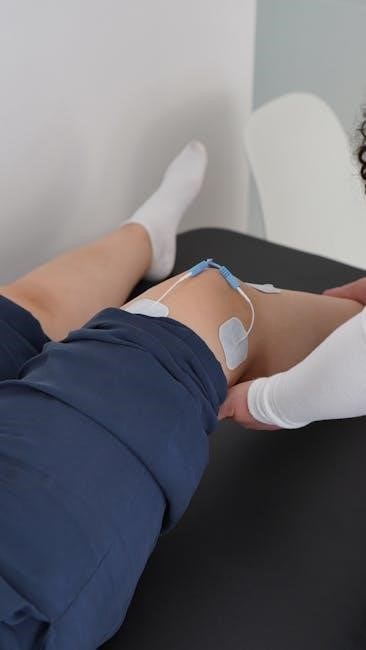
Proper placement is key; pads should be applied to clean, dry skin, at least 2 inches (5 cm) apart, as recommended in many guides. Avoid placing them over bony prominences or open wounds.
For back pain, pads are commonly positioned on either side of the spine. Guides emphasize that experimentation with placement may be needed to find the most effective location for individual pain points. Repositioning is vital if stimulation feels weak or uneven. Always follow the manufacturer’s instructions for optimal results.
The TENS Unit: Controls and Display
TENS unit controls typically include power buttons, intensity adjustment dials or buttons, and mode selection options. User guides highlight the function of each control, explaining how to increase or decrease stimulation strength.
The display often shows the selected mode, intensity level, and battery status. Some units feature dual channels (CH1 & CH2), allowing independent control of two electrode pairs. Understanding these controls is vital for customizing treatment.
Guides emphasize the importance of starting with the lowest intensity and gradually increasing it until a comfortable, yet effective, sensation is achieved. Familiarize yourself with the unit’s features before use for optimal pain relief.
Connecting the Electrodes
Connecting electrodes involves attaching lead wires to the electrode pads and then plugging them into the TENS unit. User guides stress ensuring a secure connection to prevent interrupted stimulation. Typically, each pad connects to a separate channel on the unit.
Proper connection is crucial for effective pain relief. Ensure the pads are firmly attached to the skin before powering on the device. Avoid touching the metal contact points on the pads while the unit is active.
Guides often illustrate the correct wiring configuration. Always refer to your specific model’s instructions for accurate electrode placement and connection procedures.
Setting Up Your TENS Machine
Initial setup requires charging the unit before first use, followed by powering it on and selecting a suitable treatment mode based on your pain needs.
Charging the Unit
Before your initial use of the TENS machine, it’s crucial to fully charge the unit to ensure optimal performance and treatment duration. Refer to your device’s specific user guide for detailed charging instructions, as procedures can vary between models.
Typically, charging involves connecting the provided power adapter to the TENS unit and plugging it into a standard electrical outlet. A charging indicator light will illuminate, signaling that the charging process has begun.
Allow sufficient time for a complete charge – this may take several hours. Avoid using the TENS machine while it is actively charging. Once fully charged, the indicator light will typically change color or turn off, signifying readiness for use. Proper charging extends the battery life and ensures consistent pain relief.
Powering On and Off
To power on your TENS unit, locate the power button – often indicated by a universal power symbol. Press and hold this button for a few seconds until the display illuminates, confirming the unit is active. Always ensure electrode pads are correctly connected before powering on to prevent unexpected stimulation.
To power off the device, repeat the process: press and hold the power button until the display turns off. It’s vital to turn the unit off before applying, moving, or removing the electrode pads, as highlighted in safety guidelines.
Some models feature an automatic shut-off function to conserve battery life. Consult your user manual for details on this feature and any specific power-saving modes available.
Selecting Treatment Modes
TENS units typically offer various treatment modes designed for different pain types and preferences. Common modes include Continuous, Burst, and Modulation. Continuous provides a steady electrical current, while Burst delivers pulses in intervals. Modulation automatically varies the intensity and frequency to prevent accommodation.
Your user guide will detail each mode’s specific characteristics and recommended applications. Experimenting with modes, under guidance, can help identify what works best for your pain. Many units feature independent Channel 1 and Channel 2 controls, allowing for customized settings.
Start with a lower intensity when trying a new mode and gradually increase it for optimal relief.
Using the TENS Machine Effectively
Optimal pain relief requires careful adjustment of intensity, strategic electrode placement, and consistent treatment schedules, as outlined in your TENS unit guide.
Adjusting Intensity Levels
Begin with the lowest intensity setting and gradually increase it until you feel a comfortable tingling sensation, not a strong muscle contraction. Refer to your TENS unit’s user guide for specific instructions, as controls vary between models.
Slowly raise the intensity, observing your body’s response. The goal is to find the level that provides effective pain relief without causing discomfort. If the sensation becomes too strong, immediately decrease the intensity.
Electrode pad placement and size can influence the required intensity. If pads are too close together, or too small, you may need a higher setting. Repositioning or replacing pads can help.
Remember to lower the intensity if you experience skin irritation or if the unit is not providing adequate relief. Consistent monitoring and adjustment are key to maximizing the benefits of your TENS machine.
Optimal Electrode Pad Placement for Different Pain Areas
Effective TENS therapy relies on correct electrode pad placement. For back pain, position pads on either side of the spine, flanking the painful area. Shoulder pain benefits from pads placed above and below the shoulder joint.
For period or endometriosis pain, pads can be placed on the lower abdomen, ensuring they are at least 2 inches (5cm) apart. Labor pain often involves placing pads on the lower back, following the natural pain pathways.

Always refer to your user guide for specific diagrams and recommendations. Experimenting with slight adjustments can optimize relief. Ensure pads are firmly attached to clean, dry skin for maximum conductivity.
Avoid placing pads over bony prominences or open wounds. Proper placement, combined with adjusted intensity, delivers targeted pain relief.
Treatment Duration and Frequency
Typical TENS therapy sessions range from 15 to 60 minutes, several times a day, as needed for pain relief. Begin with shorter durations and gradually increase as tolerated. Consistent, regular use often yields better results than infrequent, long sessions.
Your user guide will provide specific recommendations based on your unit and condition. It’s crucial to avoid continuous use for extended periods, as this can lead to skin irritation or reduced effectiveness.
Listen to your body and adjust the frequency and duration accordingly. Some users find relief with intermittent sessions throughout the day, while others prefer longer, less frequent treatments.
Remember to allow your skin to rest between sessions to prevent discomfort and maintain optimal electrode pad adhesion.

Safety Precautions
Always turn off the TENS unit before applying or removing electrode pads, and never share them. Keep the device away from children and water.
Be mindful of potential interference with medical devices like EKG monitors during use.
Contraindications: When NOT to Use a TENS Machine
It is crucial to understand when a TENS machine should not be used to ensure your safety. Do not use a TENS unit if you have a pacemaker or other implanted electronic devices, as it may cause interference.
Avoid using it on damaged or irritated skin, open wounds, or areas with active infections. Individuals with epilepsy or heart conditions should consult their doctor before use.
TENS should not be applied over the eyes, front of the neck, or genitals. Pregnant women, especially in the first trimester, must seek medical advice before utilizing TENS therapy.
Furthermore, avoid use if you have deep vein thrombosis (DVT) or are experiencing unexplained pain. Always prioritize consulting a healthcare professional if you have any underlying health concerns.
Avoiding Interference with Other Medical Devices
TENS machines utilize electrical currents, and it’s vital to prevent interference with other medical devices. Specifically, individuals with implanted devices like pacemakers, defibrillators, or ECG monitors should exercise extreme caution and consult their physician before using a TENS unit.
The electrical impulses from the TENS machine can potentially disrupt the function of these sensitive devices, leading to inaccurate readings or malfunctions.
Maintain a safe distance between the TENS electrode pads and any implanted medical equipment.
Always inform healthcare professionals about your TENS machine use before undergoing any medical procedures or tests. Prioritize safety and avoid potential complications by understanding these crucial guidelines.
Skin Irritation and Electrode Pad Care
Maintaining skin health and proper electrode pad care is crucial for comfortable and effective TENS therapy. Some users may experience mild skin irritation under the electrode pads. Ensure your skin is clean and dry before application, and avoid using lotions or oils.
If irritation occurs, discontinue use and allow the skin to recover. Rotate electrode pad placement with each session to prevent localized sensitivity.
Electrode pads lose adhesiveness over time; replace them when they no longer stick securely. Store pads properly, typically in their original packaging, to maintain their effectiveness.
Never share electrode pads with others to prevent cross-contamination.

Troubleshooting Common Issues
If your TENS unit isn’t working, first check the battery and connections. Weak stimulation may indicate pad placement issues or low intensity settings.
Refer to your user guide for specific solutions to common problems.
Unit Not Turning On
If your TENS unit fails to power on, several factors could be at play. Begin by verifying the unit has been adequately charged, as many modern devices require a charging period before initial use or after extended inactivity. Consult your user guide for specific charging instructions and recommended charging times.
Next, ensure the power button is being pressed correctly and held for the appropriate duration – some units require a slightly longer press to activate. Inspect the battery compartment (if applicable) for any signs of corrosion or damage, and replace the batteries if necessary.
Double-check that the unit isn’t set to an automatic shut-off mode or a low-power saving setting. If the problem persists, consult the troubleshooting section of your user guide or contact customer support for further assistance, referencing the model number for accurate guidance.
Weak or No Stimulation
Experiencing weak or absent stimulation with your TENS unit can be frustrating. First, gradually increase the intensity level using the controls on the unit, ensuring you don’t exceed a comfortable threshold. Verify the electrode pads are securely attached to your skin and haven’t lost their adhesiveness – reposition or replace them if needed.
Ensure the pads aren’t too close together; a minimum separation of 2 inches (5 cm) is often recommended. Check for damaged or expired electrode pads, as their conductivity diminishes over time. Confirm the unit’s settings are appropriate for your desired treatment mode and pain area.
If issues persist, consult your user guide for specific troubleshooting steps or contact customer support.
Electrode Pad Problems
Electrode pad issues are common with TENS units. If pads lose adhesion, gently clean the skin with mild soap and water before reapplication. Avoid oils or lotions, which can hinder conductivity. Replace pads when they become dry, cracked, or lose their stickiness – typically after 20-30 uses.
Ensure you’re using the correct pad size for the treatment area; smaller pads may be insufficient. If experiencing skin irritation, discontinue use and try hypoallergenic pads. Properly store pads in a cool, dry place, ideally in their original packaging, to maintain their effectiveness.
Always inspect pads for damage before each use, and never share them with others for hygiene reasons.

TENS Machines for Specific Conditions
TENS units effectively manage pain during labor, postpartum recovery, and conditions like period pain or endometriosis, offering a non-pharmacological approach to relief.
Pain Management During Labor
TENS machines are frequently utilized by expectant mothers to alleviate labor pain, offering a safe, drug-free alternative or complement to traditional pain management techniques. The mild electrical currents disrupt pain signals reaching the brain, providing relief during contractions.
Electrode pad placement is crucial; typically, pads are positioned on the lower back, following the natural curve. Some women also find relief with placement on the sides of the abdomen. It’s essential to avoid placing pads directly over the uterus.
During labor, adjust the intensity as contractions change, increasing it as pain intensifies and decreasing it between contractions. Many user guides recommend starting with a low intensity and gradually increasing it until comfortable relief is achieved. Remember to turn the unit off before electrode pad adjustments or movement.
Consult with your healthcare provider or a trained TENS machine professional for personalized guidance on optimal settings and placement for your specific labor experience.
Managing Period and Endometriosis Pain
TENS machines are gaining recognition as a safe and effective method for managing period pain and the often debilitating discomfort associated with endometriosis. The electrical impulses can help block pain signals and potentially stimulate endorphin release, the body’s natural painkillers.
For period pain, electrode pads are commonly placed low on the abdomen, surrounding the painful area. With endometriosis, placement may vary depending on the location of the pain, often targeting the lower back and abdomen. User guides emphasize experimenting with pad placement to find what works best.
Start with a low intensity and gradually increase it until a comfortable level of pain relief is achieved. Consistent use, as directed in your device’s manual, can provide ongoing support throughout your cycle.
Always consult with your healthcare provider to determine if a TENS machine is appropriate for your specific condition and to rule out any underlying medical concerns.

Postpartum Recovery Pain Relief
TENS machines are frequently recommended by healthcare professionals for managing postpartum pain, offering a drug-free alternative for relief after vaginal birth or C-section. They can help alleviate pain from perineal tears, episiotomies, and abdominal incisions.
Electrode pad placement for postpartum pain typically involves positioning them around the perineum or on the lower abdomen, depending on the source of discomfort. User guides stress the importance of avoiding placement directly over the incision site immediately post-surgery.
Begin with the lowest intensity setting and gradually increase until a comfortable level of pain relief is achieved. Regular, short sessions, as outlined in your device’s manual, can provide sustained comfort during recovery.
Always discuss TENS machine use with your doctor or midwife to ensure it’s appropriate for your individual recovery process.

Maintenance and Storage
Regular cleaning of the unit and pads, alongside proper storage, extends the lifespan of your TENS machine. Refer to your user guide for specific instructions.
Ensure adequate battery life through correct charging and replacement practices, as detailed in the manual.
Cleaning the Unit and Pads
Maintaining cleanliness is crucial for both the longevity and effectiveness of your TENS machine. Before cleaning, always ensure the unit is powered off and, ideally, remove the batteries for added safety.
The main unit can be gently wiped down with a slightly damp, soft cloth. Avoid using harsh chemicals, abrasive cleaners, or excessive water, as these can damage the internal components. Focus on removing any dirt or residue that may accumulate on the surface.
Electrode pads require regular cleaning to maintain their adhesiveness and conductivity. After each use, gently wipe the pads with a damp cloth to remove any skin oils or debris. Avoid using soap or lotions, as these can leave a residue that interferes with adhesion.
If the pads become less sticky over time, you can try lightly misting them with water. When the pads are no longer effective, replace them with new ones, following the manufacturer’s recommendations found in your user guide.
Proper Storage Techniques
Correct storage significantly extends the life of your TENS machine and its components. When not in use, store the unit in a cool, dry place, away from direct sunlight and extreme temperatures. Avoid storing it in humid environments like bathrooms, as moisture can damage the internal circuitry.
Keep the unit in its original case or a protective bag to prevent dust and physical damage. Store electrode pads flat, ideally on their original backing sheet, to maintain their adhesiveness. Avoid folding or bending the pads, as this can compromise their conductivity.
Remove batteries from the unit if it will be stored for an extended period to prevent corrosion. Regularly check the storage area to ensure it remains clean and dry, safeguarding your investment and ensuring optimal performance when you next need it.
Battery Life and Replacement
TENS unit battery life varies depending on usage intensity and frequency. Generally, expect several hours of continuous use on a full charge. A noticeable decrease in stimulation strength often indicates low battery levels, signaling the need for recharging.
Most units utilize rechargeable batteries; follow the manufacturer’s instructions for proper charging procedures. Avoid overcharging, as this can reduce battery lifespan. When replacing batteries (if applicable), use only the type specified in the user manual.
Incorrect battery types can damage the unit or pose a safety hazard. Dispose of old batteries responsibly, following local regulations for electronic waste. Regular maintenance, including proper charging, maximizes battery performance and ensures reliable operation;