
latissimus dorsi stretch pdf
Latissimus dorsi stretching is crucial for flexibility, relieving tightness, and improving movement, benefiting gym-goers, swimmers, and desk workers alike. Explore effective exercises!
What are the Latissimus Dorsi Muscles?
The latissimus dorsi, often called “lats,” are the broad, powerful muscles covering the mid and lower back. These muscles extend to the sides, playing a vital role in numerous movements. They are instrumental in pulling motions, like swimming or rowing, and contribute significantly to shoulder adduction and extension.
Essentially, they’re the “wing” muscles, providing that V-shaped torso appearance. Understanding their function is key to appreciating why stretching them is so beneficial. Tight lats can restrict movement and contribute to postural imbalances, making targeted stretching essential for overall physical well-being and performance.
Why Stretch Your Lats?
Stretching your latissimus dorsi offers numerous benefits, impacting posture, athletic performance, and daily comfort. Tight lats can lead to rounded shoulders and restricted upper back mobility, hindering breathing and contributing to pain. Regular stretching counteracts these effects, promoting better alignment and reducing muscle tension.
For athletes, particularly swimmers and weightlifters, flexible lats enhance range of motion and power. Even for desk workers, releasing lat tightness alleviates discomfort from prolonged sitting. Prioritizing lat stretches improves overall movement efficiency and supports a healthier, more active lifestyle.

Understanding Latissimus Dorsi Anatomy
The latissimus dorsi, or “lats,” are large muscles on your sides and back, vital for pulling, reaching, and spinal stabilization – understanding their structure aids stretching.
Origin and Insertion Points
Understanding the latissimus dorsi’s origin and insertion is key to effective stretching. It originates from several points along the spine – specifically, the T7-L5 vertebrae, the thoracolumbar fascia, the iliac crest, and the inferior angle of the scapula.
From these diverse starting points, the muscle converges and inserts into the intertubercular groove of the humerus (upper arm bone). This broad origin allows for powerful movements, but also contributes to potential tightness. Knowing these attachment sites helps target stretches for optimal results, improving range of motion and alleviating discomfort.
Function of the Latissimus Dorsi
The latissimus dorsi plays a vital role in numerous movements. Primarily, it’s responsible for adduction, extension, and internal rotation of the arm. This means it helps pull your arm down and back, like during swimming or rowing. It also assists in stabilizing the spine and contributes to posture.
Because of its extensive functions, the lats are heavily used in many activities, making them prone to tightness. Stretching restores optimal function, preventing limitations and enhancing performance. Understanding these functions highlights the importance of maintaining lat flexibility.

Common Causes of Lat Tightness
Lat tightness often stems from sedentary lifestyles, poor posture, or overuse through activities like swimming and weightlifting, impacting muscle flexibility and function.
Sedentary Lifestyle & Posture
Prolonged sitting, common in modern life, significantly contributes to lat tightness. A slumped posture rounds the shoulders forward, causing the latissimus dorsi muscles to shorten and become less flexible over time. This habitual positioning weakens opposing muscles, exacerbating the imbalance.
Poor posture restricts the natural range of motion in the upper back and shoulders, leading to chronic tension. Regularly incorporating lat stretches can counteract these effects, restoring proper alignment and improving overall musculoskeletal health. Addressing postural habits is key to preventing future tightness.
Overuse from Exercise (Swimming, Weightlifting)
Intense physical activity, particularly swimming and weightlifting, frequently leads to latissimus dorsi tightness. Swimming’s repetitive arm movements and weightlifting’s pulling motions heavily engage these muscles, causing fatigue and potential strain. Without adequate recovery and stretching, the lats can become shortened and restricted.
Overuse can create trigger points and muscle imbalances. Consistent lat stretches are vital for athletes to maintain flexibility, prevent injuries, and optimize performance. Prioritizing post-exercise stretching helps restore muscle length and reduce the risk of chronic tightness developing from demanding training regimens.

Effective Latissimus Dorsi Stretches
Discover a range of targeted stretches – standing, overhead, child’s pose variations, and foam rolling – designed to effectively release tension in your latissimus dorsi muscles.
Standing Lat Stretch
The standing lat stretch is a foundational exercise for improving flexibility in the latissimus dorsi. Begin by standing tall with a straight back, extending both arms overhead. Gently lean to one side, feeling a stretch under your armpit and towards your shoulder blade.
Hold this position for 30 to 45 seconds, repeating three times on each side. This stretch effectively targets the lats, promoting increased range of motion and relieving tightness. Proper form ensures maximum benefit and minimizes risk of injury. Focus on maintaining a straight back throughout the movement.
How to Perform the Standing Lat Stretch
To execute the standing lat stretch, start with feet shoulder-width apart, maintaining a neutral spine. Raise both arms directly overhead, ensuring they are fully extended. Initiate a gentle lean to one side, keeping your core engaged and back straight.
You should feel a stretch along the side of your upper back and under your armpit. Avoid overextending or forcing the stretch; listen to your body. Hold the stretch for 30-45 seconds, breathing deeply, and repeat three times per side for optimal results.
Modifications for Different Flexibility Levels
For beginners, a smaller lean during the standing stretch is recommended, focusing on feeling a gentle pull rather than intense stretching. Utilizing a wall for slight support can also aid stability. Intermediate levels can increase the lean’s depth, holding for a longer duration.
Advanced individuals might incorporate a slight rotation of the torso towards the stretching side to intensify the stretch. Remember to prioritize proper form over depth, and always listen to your body’s signals to prevent injury. Gradual progression is key.
Overhead Dowel Abduction Stretch
This stretch targets latissimus dorsi flexibility using a dowel rod held above the head. It’s particularly helpful for those experiencing pain or limited range of motion. A good arm assists the affected arm in moving away from the body, enhancing abduction.
Focus on controlled movements, only progressing as far as comfortable, unless advised otherwise by a therapist. This exercise improves shoulder mobility and reduces lat tightness. Proper execution is vital for maximizing benefits and minimizing risk of strain.
Proper Form and Technique
Begin by securely holding the dowel rod with both hands, positioned directly overhead. Maintain a slight bend in your elbows to avoid locking the joints. Utilize your unaffected arm to gently guide the potentially painful arm outwards, initiating the abduction movement.
Crucially, avoid forcing the stretch; only move within a comfortable range of motion. Keep your core engaged and back straight throughout the exercise. Focus on feeling a stretch under the armpit and along the side of your back, indicating lat engagement.
Safety Considerations
Prioritize listening to your body; discontinue the stretch immediately if you experience sharp or increasing pain. Avoid overextension, as this can lead to muscle strain or injury. Individuals with pre-existing shoulder or back conditions should consult a healthcare professional before attempting this stretch.
Ensure a stable surface and adequate space to perform the exercise safely. Do not attempt to push beyond your current flexibility level; gradual progression is key. If advised by a therapist, adhere strictly to their personalized recommendations.
Child’s Pose Variation for Lats
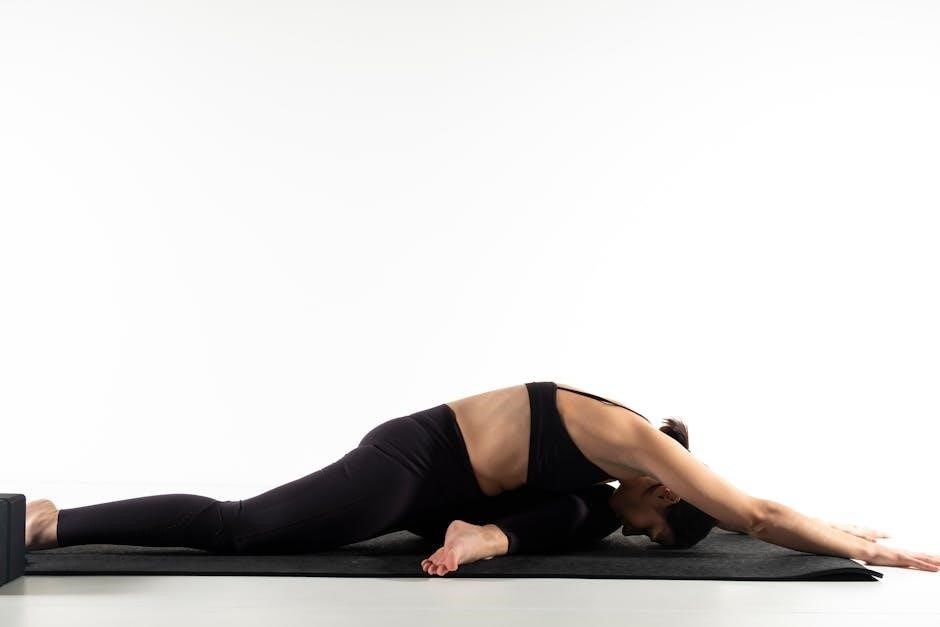
Modify the traditional Child’s Pose by widening your knees and extending your arms forward, reaching as far as comfortable. Keep your lower back rounded, actively pressing your chest towards the floor. This broadened position intensifies the lat stretch, targeting the muscles along the sides of your back.
Hold this pose for 30 seconds, focusing on deep, controlled breathing. Beyond lat stretching, this variation also gently stretches the hips, thighs, and ankles, promoting overall relaxation and spinal decompression.
Step-by-Step Instructions
Begin in a crawling position on the floor, ensuring your hands are directly under your shoulders and knees are hip-width apart. Sit back onto your heels, lowering your buttocks towards your ankles. Extend both arms forward, reaching as far as possible while maintaining a rounded lower back.
To isolate one latissimus dorsi, reach both arms towards the opposite side, feeling a stretch along the side of your back. Hold this position for approximately 30 seconds, breathing deeply and consistently. Repeat on the other side for balanced stretching.
Benefits Beyond Lat Stretching
Child’s pose variations extend benefits beyond just the latissimus dorsi muscles. This stretch gently opens the hips, providing relief from lower back tension and promoting relaxation throughout the entire posterior chain. It also encourages spinal decompression, alleviating pressure and improving posture.
Furthermore, the pose can calm the nervous system, reducing stress and anxiety. Deep breathing during the stretch enhances oxygenation, improving overall well-being. Regular practice supports better body awareness and a greater sense of physical and mental balance.
Foam Rolling for Latissimus Dorsi
Foam rolling effectively targets trigger points within the latissimus dorsi, releasing tension and improving muscle function. Lie on your side with the foam roller positioned under your armpit, and slowly roll along the length of your lats, pausing on tender spots.
Apply moderate pressure, avoiding direct rolling over the spine. This self-myofascial release technique enhances blood flow, reduces muscle soreness, and increases range of motion. Consistent foam rolling complements stretching, promoting optimal lat health and performance.
Targeting Trigger Points
Trigger points within the latissimus dorsi can cause referred pain in the back, shoulder, and even down the arm. Foam rolling directly addresses these knots, releasing built-up tension and restoring proper muscle function. When rolling, focus on areas that feel particularly sensitive or tight.
Sustained pressure on these points can help to deactivate them, alleviating discomfort and improving flexibility. Identifying and targeting trigger points is a key component of effective latissimus dorsi care, enhancing overall movement and reducing pain.
Technique and Pressure
When foam rolling your lats, lie on your side with the roller positioned under your armpit, supporting your weight with your forearm. Slowly roll from your armpit down towards your lower back, pausing on tender spots. Apply moderate pressure – it should be uncomfortable, but not excruciating.
Control the movement and breathe deeply, allowing the muscle to relax. Avoid rolling directly over your spine or bony prominences. Several passes are recommended, focusing on areas of tightness. Adjust pressure based on your tolerance and sensitivity.
Seated Lat Stretch
To perform the seated lat stretch, sit on the floor with legs extended and arms raised overhead, clasping your hands together. Gently lean to one side, keeping your back straight and core engaged. You should feel a stretch along the side of your torso and under your armpit.
For increased intensity, slightly pull your arms towards the opposite side as you lean. Hold the stretch for 30 seconds, then repeat on the other side. Ensure controlled movements and avoid bouncing, focusing on a deep, sustained stretch.
Performing the Seated Stretch Correctly
Begin by sitting upright with legs extended forward, maintaining a neutral spine. Raise both arms overhead, interlock fingers, and gently lean to one side, initiating the stretch. Focus on keeping your back straight and avoid rounding your shoulders forward.
Breathe deeply throughout the movement, allowing the stretch to deepen with each exhale. Avoid forcing the stretch; only go as far as comfortable; Maintain core engagement to support your spine and prevent strain. Repeat on the opposite side for balanced stretching.
Variations for Increased Intensity
To deepen the seated lat stretch, gently pull your elbow towards the opposite knee while maintaining an upright torso. Another variation involves slightly rotating your torso towards the side you’re stretching, enhancing the stretch along the lats and obliques.
For advanced flexibility, consider using a resistance band looped around your feet, holding the ends with your hands while performing the overhead reach and lean. Remember to control the movement and avoid overstretching, prioritizing proper form over intensity.
Head Tilt Stretch (Related Muscle Relief)
While primarily targeting neck muscles, head tilts indirectly impact lat tension by releasing tightness in surrounding areas. A tight neck can contribute to upper back and shoulder discomfort, exacerbating lat issues. Gently tilting your head towards your shoulder allows gravity to assist, promoting relaxation.
Ensure shoulders remain relaxed and heavy throughout the movement, avoiding any upward shrugging. This stretch complements lat stretches, addressing interconnected muscle imbalances and fostering overall upper body mobility. Repeat on both sides for balanced relief.
How Head Tilts Impact Lat Tension
The connection between head position and lat tension isn’t immediately obvious, but a forward head posture often accompanies tight lats. This posture increases strain on the upper back and shoulders, indirectly activating and tightening the latissimus dorsi.
By releasing tension in the neck and upper trapezius muscles through head tilts, you can alleviate some of this strain. This allows the lats to relax, improving range of motion and reducing discomfort. It’s a subtle yet effective way to support broader muscle health.

Proper Execution of Head Tilts
To perform a head tilt correctly, sit or stand with a relaxed posture. Gently tilt your head towards your shoulder, aiming to bring your ear closer without lifting your shoulder. Maintain a soft gaze and avoid forcing the stretch.
Ensure your shoulders remain heavy and relaxed throughout the movement; avoid tension. Hold the tilt for 15-30 seconds, breathing deeply. Repeat on the opposite side. This gentle stretch complements lat stretches, addressing related muscle imbalances and promoting overall upper body flexibility.

Creating a Lat Stretch Routine
Design a routine with warm-up exercises, followed by lat stretches like the standing stretch or child’s pose, and integrate them into your cool-down.
Warm-up Exercises
Prior to performing latissimus dorsi stretches, a proper warm-up is essential to prepare the muscles and increase blood flow, minimizing the risk of injury. Begin with five to ten minutes of light cardio, such as arm circles or torso twists. Dynamic stretches, like arm swings and shoulder rotations, further enhance muscle readiness.
Include cat-cow stretches to mobilize the spine, and gentle thoracic rotations to improve upper back flexibility. These movements prime the lats and surrounding muscles for deeper stretching, maximizing the benefits and ensuring a safe and effective stretching session. Remember to move slowly and deliberately, focusing on controlled movements.
Cool-down Integration
Following your latissimus dorsi stretching routine, a cool-down period is vital for gradually returning muscles to their resting state. Incorporate static stretches, holding each for 30-45 seconds, to enhance flexibility gains. Gentle movements, like slow arm circles and upper back extensions, help reduce muscle soreness.
Deep breathing exercises promote relaxation and improve oxygen delivery to the muscles. This cool-down phase aids in preventing stiffness and optimizing recovery. Consistent cool-downs contribute to long-term muscle health and flexibility, complementing the benefits of your lat stretches.

Lat Stretches for Specific Activities
Tailored stretches address unique needs: swimmers benefit from overhead reaches, weightlifters from side bends, and desk workers from thoracic extensions for optimal results.
Stretches for Swimmers
Swimmers heavily rely on latissimus dorsi for powerful pull-throughs, making flexibility paramount. Incorporate overhead dowel abduction stretches, gently assisting with the non-dominant arm to enhance range of motion. Prioritize standing lat stretches, leaning side-to-side to target those crucial muscle fibers.
Regularly performing these stretches counteracts the repetitive motions of swimming, preventing tightness and potential injuries. Foam rolling can also address trigger points, improving overall performance and reducing muscle soreness. Remember consistent stretching is key for maintaining optimal shoulder and back health.
Stretches for Weightlifters
Weightlifting demands significant lat engagement during pulling exercises like pull-ups and rows. Implement seated lat stretches, focusing on controlled movements to increase flexibility. The child’s pose variation provides a gentle yet effective stretch, promoting recovery and preventing muscle imbalances.
Don’t overlook foam rolling to release tension and address trigger points developed during intense training sessions. Prioritizing lat stretches post-workout aids in muscle recovery and improves range of motion for subsequent lifts, ultimately enhancing performance and minimizing injury risk.
Stretches for Desk Workers
Prolonged sitting often leads to rounded shoulders and tight lats. Incorporate simple stretches throughout the workday, like the standing lat stretch, to counteract these effects. Overhead dowel abduction, even without a dowel, can be modified using just your arms to open the chest and stretch the lats.
Regular head tilts can also alleviate tension radiating from related muscles. Prioritizing these stretches improves posture, reduces discomfort, and enhances overall well-being for those with sedentary jobs, promoting better spinal health.

Precautions and Considerations
Always listen to your body during lat stretches, avoiding pain. Stop if discomfort arises, and consult a healthcare professional before stretching if you have injuries.
Listening to Your Body
Prioritize mindful movement when performing latissimus dorsi stretches. A gentle pull or tension is expected, but sharp or intense pain signals a need to immediately stop. Never force a stretch beyond your current range of motion; gradual improvement is key. Pay attention to how your body feels during and after stretching.
Respecting your body’s signals prevents injury and promotes effective, sustainable flexibility gains. Modifications are always acceptable – adjust the stretch’s intensity or choose a different variation if needed. Remember, consistency and proper form outweigh pushing yourself too hard.
When to Avoid Stretching
Avoid stretching your latissimus dorsi if you’ve recently experienced a muscle tear, strain, or other acute injury. Stretching inflamed tissues can worsen the condition and delay healing. Similarly, refrain from stretching during an active flare-up of conditions like sciatica or a herniated disc, as it might aggravate nerve compression.
If you have a fever, are acutely ill, or have recently undergone surgery, postpone stretching until you’ve fully recovered. Always consult with a healthcare professional before starting any new exercise routine, especially if you have pre-existing medical conditions.

Resources for Further Learning (PDFs & Guides)
Explore reputable PDFs and online video tutorials for detailed guidance on latissimus dorsi stretches, ensuring proper form and maximizing benefits for all levels.
Finding Reputable Lat Stretch PDFs
Locating trustworthy PDFs requires careful consideration. Search for resources from certified physical therapists, athletic trainers, or established fitness organizations. University websites often host detailed anatomical guides with stretching protocols.
Prioritize PDFs that include clear illustrations or diagrams demonstrating proper form. Look for documents outlining potential modifications for varying flexibility levels and addressing safety precautions. Beware of sources lacking credentials or promoting overly aggressive stretching techniques;
Cross-reference information with multiple sources to ensure accuracy and completeness before implementing any new stretching routine. Always prioritize your body’s feedback!
Online Video Tutorials
Complementing PDF guides with video tutorials enhances understanding and proper execution. Platforms like YouTube offer numerous demonstrations of latissimus dorsi stretches, often presented by qualified fitness professionals.
Seek out videos that emphasize correct form, breathing techniques, and common mistakes to avoid. Pay attention to cues regarding spinal alignment and shoulder positioning. Look for tutorials offering modifications for different fitness levels.
Remember to critically evaluate the source’s credentials and prioritize videos demonstrating safe and effective stretching practices. Combine visual learning with written instructions for optimal results.